Is thatched roofing a fire risk?
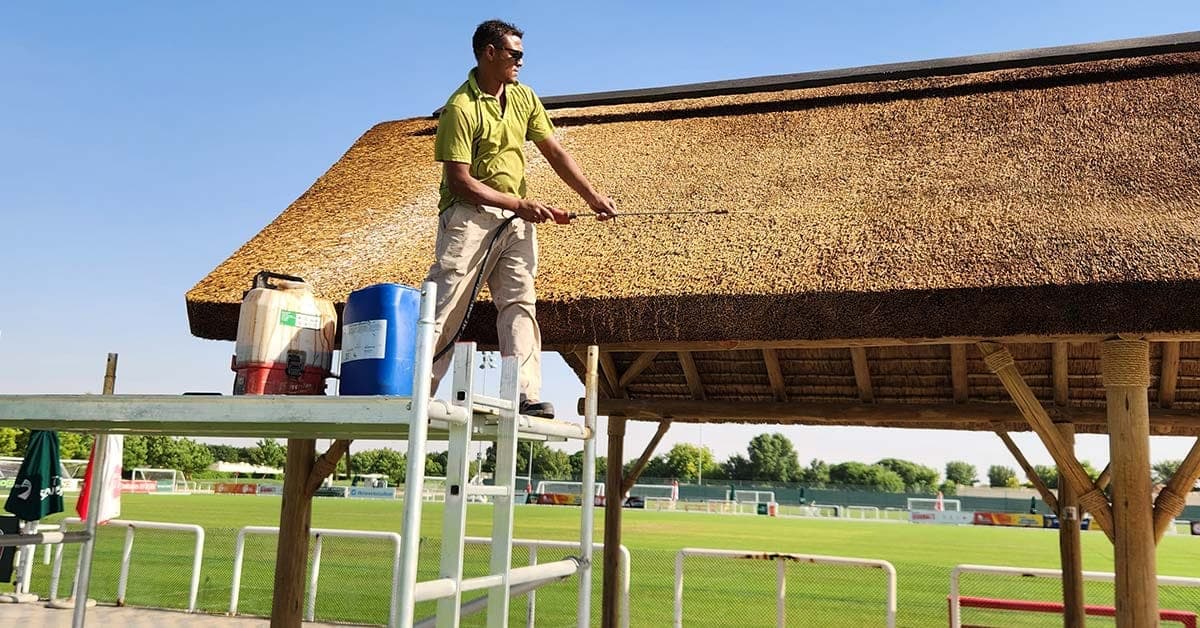
Untreated natural thatch is combustible, like most organic roofing and building materials. But treated correctly with a fire-retardant product, thatch can meet significantly higher fire-safety standards while keeping its natural look and performance intact. The key word is treated: the fire-safety conversation around thatch is really a conversation about treatment quality, not about thatch as a material category.
This distinction matters, especially for anyone comparing thatch to conventional roofing materials when making a building decision. The risk profile changes substantially depending on whether, and how, the material has been treated.
How does fire-retardant treatment work?
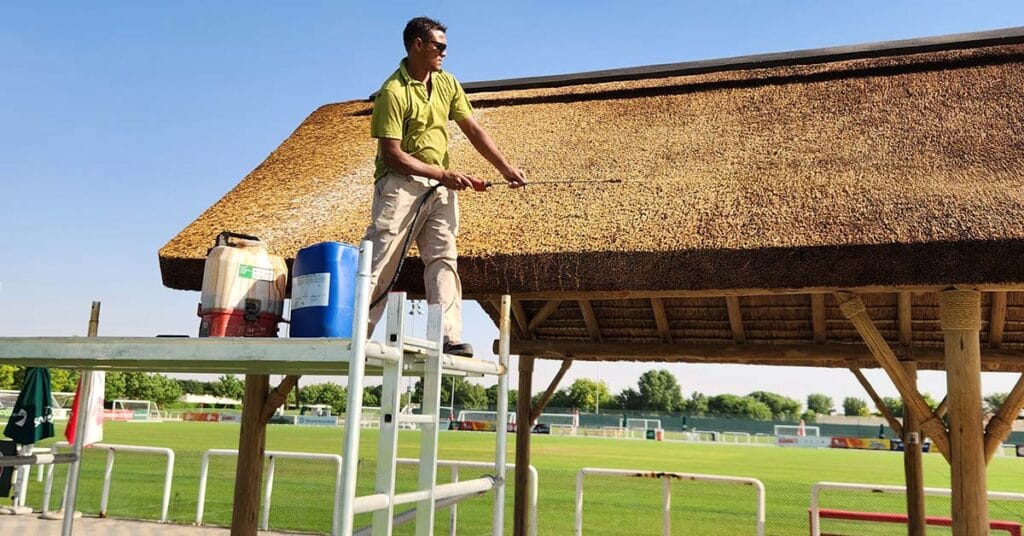
Fire-retardant treatments, such as Cape Reed's Fireshield, work by changing how the material responds to heat and flame, typically by:
- Slowing ignition time, giving occupants more time to respond
- Reducing flame spread rate across the roof surface
- Lowering the intensity and duration of combustion if ignition does occur
Fireshield can be applied to thatch, timber and other structural materials, making it relevant not just for the roof itself but for the timber frame supporting it. That's an important detail, since fire risk in a structure isn't limited to the roofing material alone.
How Cape Reed makes a thatched roof fire resistant
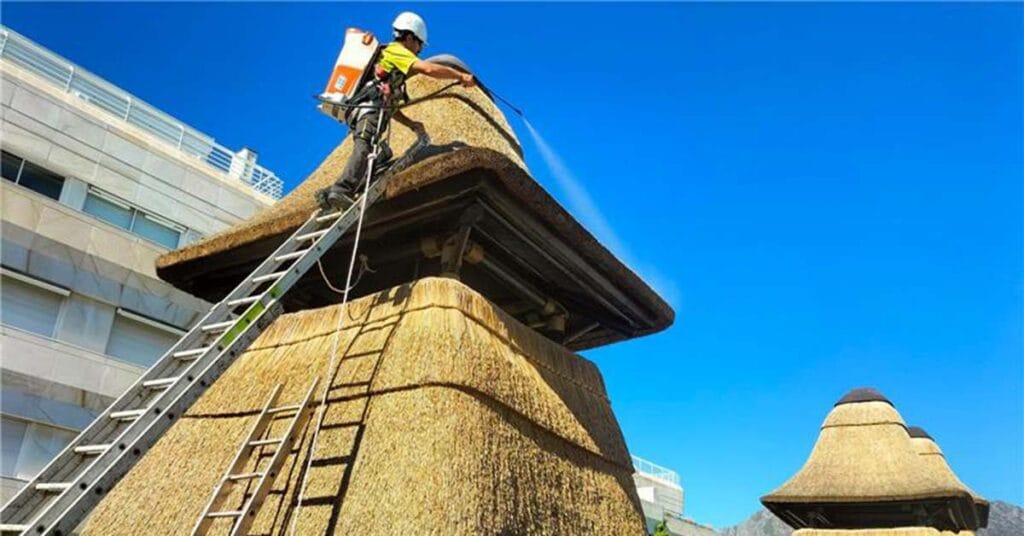
Cape Reed fire proofs thatch in layers, so protection is built into the roof rather than added as an afterthought:
- FireBloc cloth: a fire-retardant cloth, rated to resist temperatures of up to 500°C, woven through the thatch as a new roof is built.
- Fireshield FRC 101: a water-based fire retardant for thatch, reed and barasti that dries clear, so the thatch keeps its natural look.
- Fireshield FRC 102: a fire-retardant coating for timber structures.
Together, the system achieves a B-Roof (t1) fire rating under UK Standard BS 476 Part 3 and European Standard EN 13501-5. Read How Fireshield Works for the full technical detail.
What to ask before installing a thatched roof
If fire safety is a priority for your project, and for commercial, hospitality or larger residential structures it should be, these are the right questions to ask any thatching provider:
- What specific fire-retardant product is used, and what standard is it tested against?
- How long does the treatment last, and how often does it need reapplying?
- What guarantee is offered on the fire-retardant treatment specifically?
- Is the treatment applied to timber structural elements as well as the thatch itself?
- Does the treatment affect the roof's appearance, weight or maintenance needs?
A reputable provider should be able to answer all five clearly and specifically. Vague answers here are a warning sign, given how much this matters for larger or commercial structures.
Fire safety for commercial and hospitality projects
For resort, restaurant and large-scale hospitality projects, where thatched structures often cover larger footprints and higher-occupancy spaces, fire-retardant treatment isn't optional in most jurisdictions, and shouldn't be treated as optional even where it isn't strictly mandated. Cutting corners on treatment quality to save cost carries a disproportionate downside risk relative to the modest cost difference in most projects.
Day-to-day habits matter too. For practical tips on barbecues, fire pits, heaters and lighting, read Fire Safety Around a Thatched Gazebo.
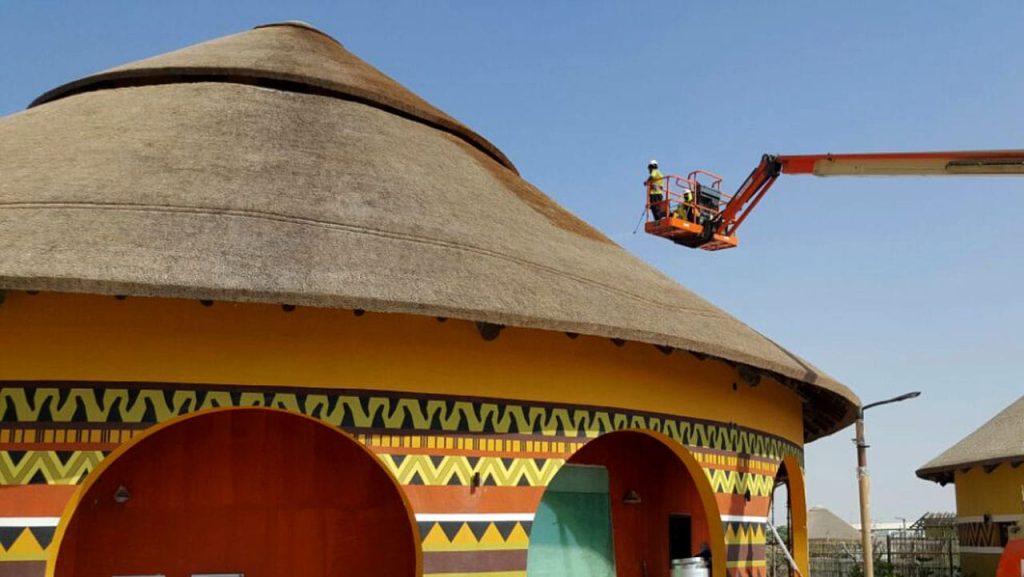
Frequently asked questions
Can a thatched roof be fireproofed?
No treatment makes a natural roof completely fireproof, but it can be made significantly more fire resistant. A FireBloc underlay combined with a Fireshield fire-retardant coating slows ignition and flame spread, and the full system achieves a B-Roof (t1) fire rating.
Does a fire retardant change how thatch looks?
Fireshield FRC 101 goes on milky and dries clear, so thatch keeps its natural colour and texture.
How often does Fireshield need reapplying?
Fireshield on thatch should be reapplied every three years, because sun and weather wear any surface treatment over time. Build re-treatment into your annual roof inspection.
Can Fireshield be applied to an existing thatched roof?
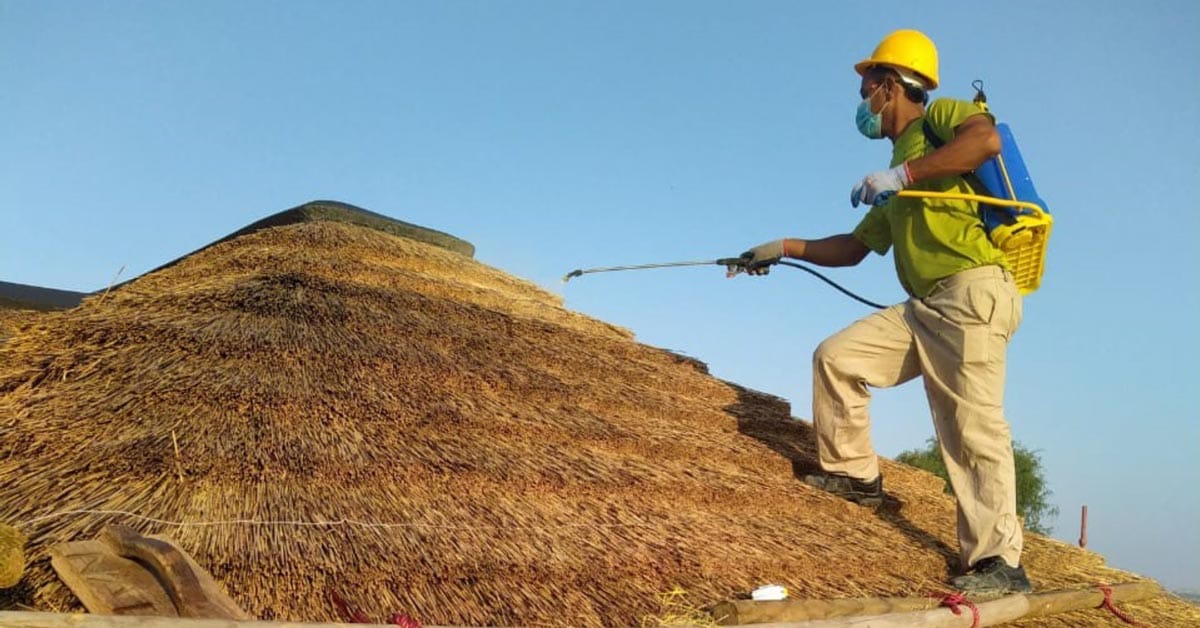
Yes. Fireshield coatings can be sprayed onto existing thatch, barasti and timber. The FireBloc cloth is built into new roofs during thatching.
The bottom line
Thatch's natural fire risk is real but manageable. With the right treatment, it's addressed to the same standard responsible builders apply to any combustible building material. The right question isn't "is thatch safe?" in the abstract, but "is this specific roof, treated in this specific way, safe for this specific use?" That's a conversation worth having with your thatching provider before any structure goes up, not after.
Cape Reed Fireshield is available through all of Cape Reed's regional offices in Dubai, Saudi Arabia and Spain, and can be applied to both the thatch and timber elements of a structure.
Learn more about Cape Reed Fireshield or contact your regional Cape Reed team to arrange treatment.

About Cape Reed Team
Our expert team at Cape Reed Spain brings decades of experience in sustainable thatching and premium outdoor living solutions.
You Might Also Like
Discover more outdoor living inspiration

How to Maintain a Thatched Roof in Hot, Dry Climates
How do you maintain a thatched roof in a hot climate? It comes down to four habits: a professional inspection at least o...
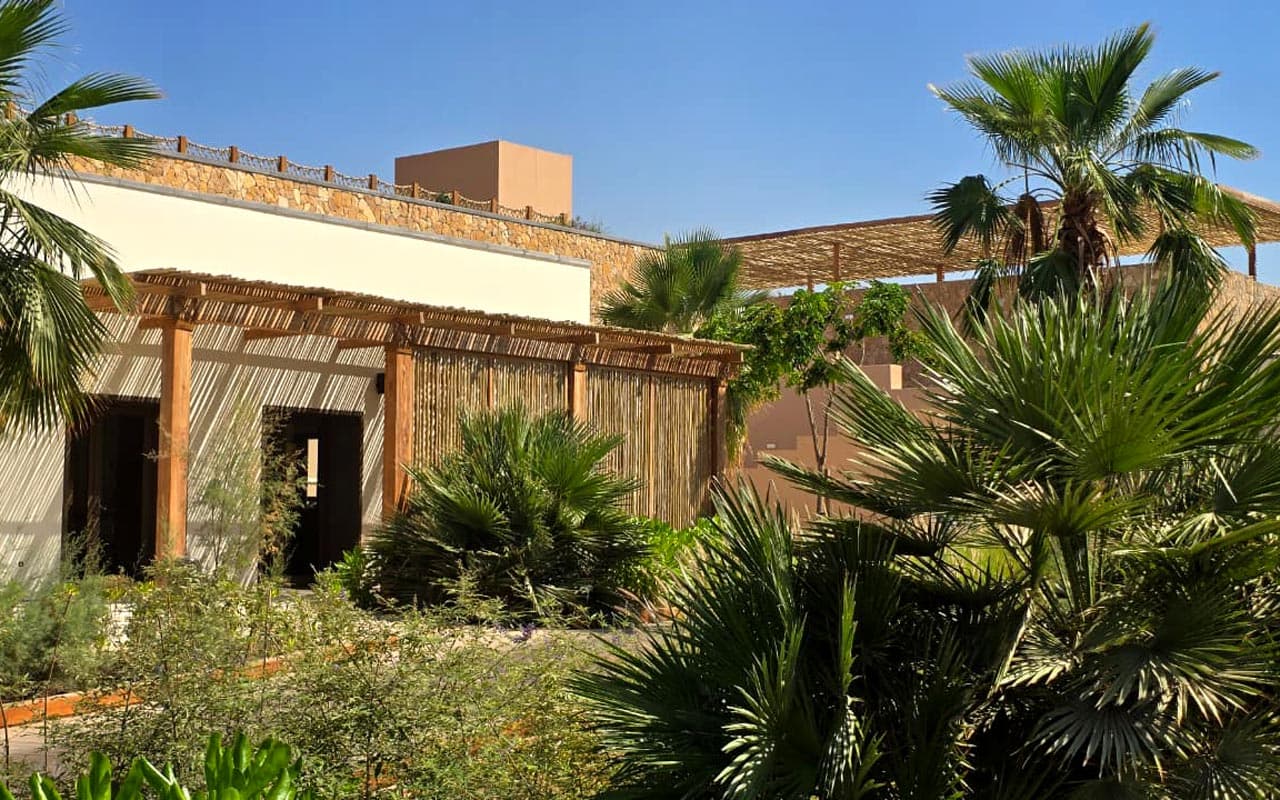
Designing Thatched Outdoor Spaces for Hotels and Resorts: What Developers Need to Know
The outdoor space of a luxury hotel or resort is not a finishing touch. It is a defining feature — the element that gues...
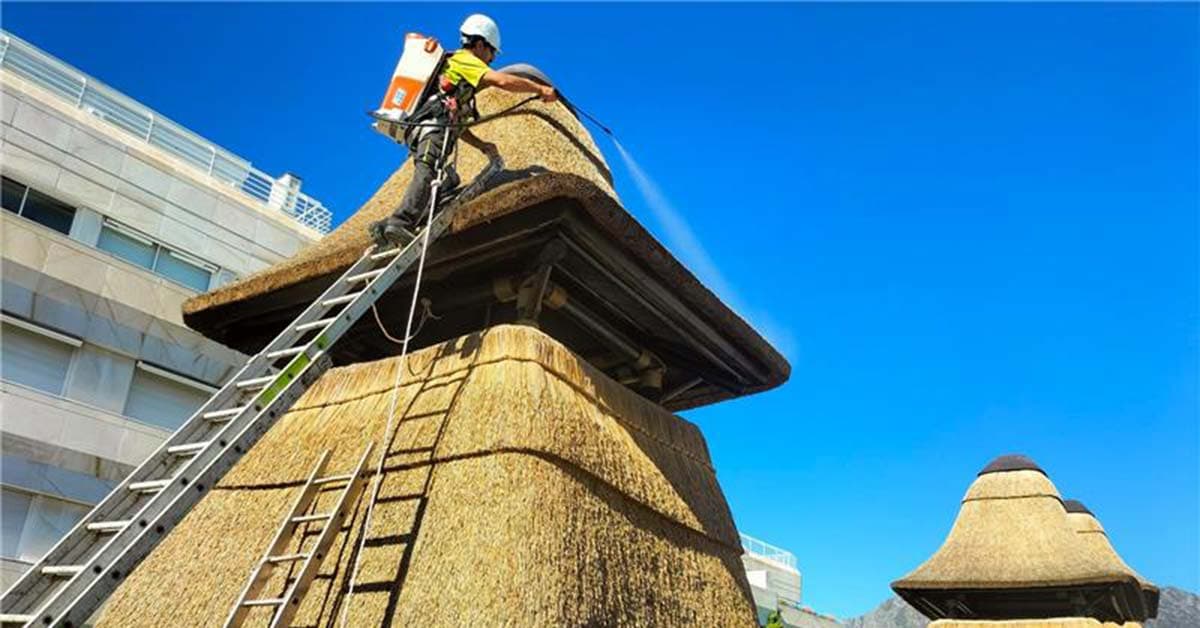
Fire Protection in Saudi Arabia: Why Cape Reed Fireshield Is Essential for Thatch and Timber Structures
In Saudi Arabia and across the Middle East, outdoor living is a defining feature of luxury developments, resorts, and ho...